
Best Insurtech Services in the US: Top Digital Insurance Platforms and AI Innovations
The insurtech landscape in the United States is rapidly evolving, driven by technological advancements and changing consumer expectations. This article explores the best insurtech services available, focusing on how digital insurance platforms and AI innovations are reshaping the industry. Readers will gain insights into leading companies, their unique offerings, and the transformative role of technology in insurance. As consumers increasingly seek personalized and efficient insurance solutions, understanding these innovations becomes crucial. We will delve into the top insurtech companies, the impact of AI and automation, the role of usage-based insurance, and emerging technologies like blockchain. By the end, you will be equipped to navigate the insurtech landscape effectively.
Which Leading US Insurtech Companies Offer the Best Services?
The insurtech sector in the US is marked by several innovative companies that are redefining how insurance is delivered. These companies leverage technology to enhance customer experience, streamline processes, and offer tailored products.
How Lemonade, Root, Hippo, and Next Insurance Innovate Digital Insurance Platforms
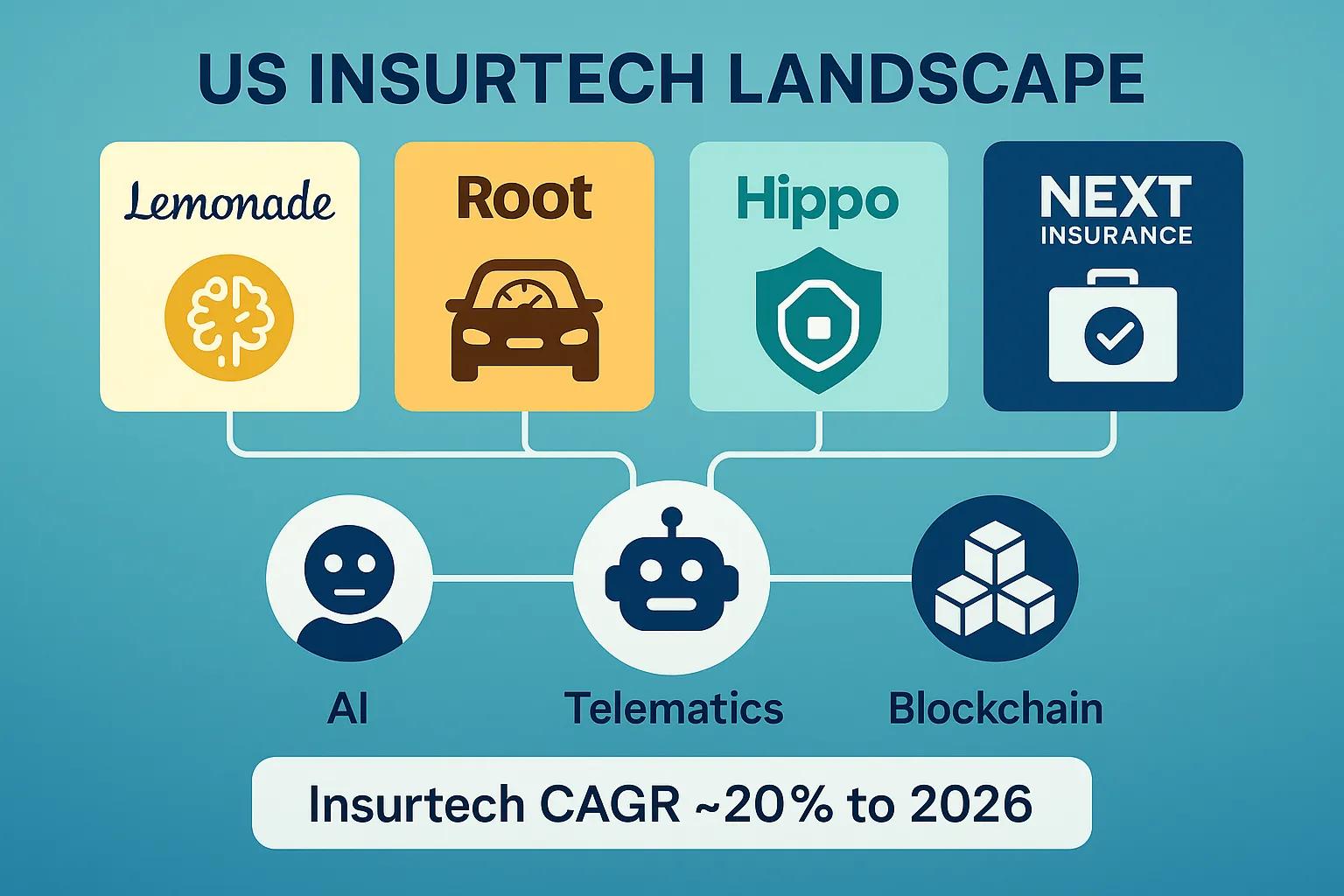
Lemonade utilizes AI to provide instant quotes and claims processing, significantly reducing the time and effort required for customers. Root Insurance employs telematics to assess driving behavior, allowing for personalized auto insurance rates based on actual driving habits. Hippo focuses on homeowners insurance, offering coverage that adapts to modern living, including smart home devices. Next Insurance targets small businesses with tailored policies that can be managed entirely online, ensuring convenience and efficiency for entrepreneurs.
What Features Distinguish the Best US Insurtech Startups?
The best insurtech startups share several key features that set them apart in a competitive market. These include:
- User-Friendly Interfaces: Simplified applications and claims processes enhance customer engagement.
- Real-Time Data Utilization: Leveraging data analytics for personalized insurance solutions.
- Flexible Coverage Options: Customizable policies that adapt to individual needs.
These features not only improve customer satisfaction but also foster loyalty in an increasingly digital marketplace.
Further emphasizing the importance of customer-centric design, research highlights how digital innovations are reshaping the customer experience in insurance.
Digital Insurance: Personalization, Self-Service Platforms & Customer Experience
The digital insurance sector is fundamentally reshaping customer experience (CX). This study explores the impact of key digital innovations—personalization, self-service platforms, and behavioral pricing models on customer experience in the digital insurance era.
Customer Experience in the Digital Insurance Era: Personalization, Self-Service Platforms, and Behavioral Pricing Models, 2025
How Does AI and Automation Transform Insurance Services in the US?
AI and automation are revolutionizing the insurance industry by enhancing efficiency and accuracy in various processes. These technologies streamline operations, reduce costs, and improve customer interactions.
In What Ways Does AI Improve Underwriting and Claims Processing?
AI enhances underwriting by analyzing vast amounts of data to assess risk more accurately. This leads to faster decision-making and more competitive pricing. In claims processing, AI can automate routine tasks, allowing for quicker resolutions and improved customer satisfaction. For instance, AI-driven systems can analyze claims data to identify patterns and flag potential fraud, ensuring a more secure process for both insurers and policyholders.
This transformative impact of AI on underwriting is further detailed in recent studies focusing on its benefits and challenges.
AI’s Transformative Impact on Life Insurance Underwriting & Customer Experience
This article explores the transformative impact of artificial intelligence (AI) on automated underwriting in the life insurance industry. It examines how AI-driven systems are revolutionizing risk assessment, policy pricing, and customer experience. The article discusses key benefits such as enhanced accuracy, cost reduction, and personalized policies, while also addressing challenges including data privacy, ethical considerations, and regulatory compliance. It further delves into the future prospects of AI in life insurance, including increased product accessibility, dynamic pricing models, and integration with emerging technologies.
The Impact of AI-Driven Automated Underwriting on the Life Insurance Industry, PK Peddamukkula, 2024
How Do Insurance Automation Services Enhance Customer Experience?
Automation in insurance services significantly enhances the customer experience by providing timely responses and reducing wait times. Automated chatbots can handle inquiries 24/7, offering immediate assistance and information. Additionally, automated claims processing ensures that customers receive their payouts faster, which is crucial during stressful times. This level of efficiency not Pre-formatted not only meets customer expectations but often exceeds them, fostering a positive relationship between insurers and clients.
What Role Does Usage-Based and Telematics Insurance Play in US Insurtech?
Usage-based insurance (UBI) and telematics are gaining traction in the insurtech space, offering innovative pricing models based on actual usage rather than traditional metrics.
How Does Telematics Enable Usage-Based Insurance Pricing Models?
Telematics technology collects data on driving behavior, such as speed, braking patterns, and mileage. Insurers use this data to create personalized pricing models that reflect individual risk profiles. This approach not only rewards safe drivers with lower premiums but also encourages better driving habits, contributing to overall road safety.
The integration of AI and telematics is indeed revolutionizing how insurers approach risk assessment and personalized offerings.
AI & Telematics: Revolutionizing Usage-Based & Personalized Insurance
The insurance industry is undergoing a fundamental transformation driven by artificial intelligence (AI) and telematics technologies, enabling the shift from traditional risk pooling models to usage-based insurance (UBI) and personalized coverage frameworks. This paper examines how AI algorithms, including machine learning (ML) and deep learning (DL), combined with telematics data collection systems, are revolutionizing insurance pricing, risk assessment, and customer engagement. The integration of Internet of Things (IoT) devices, connected vehicles, and wearable sensors provides insurers with granular, real-time behavioral data that enables dynamic premium adjustment and individualized policy customization.
Usage-Based and Personalized Insurance Enabled by AI and Telematics, T Sun, 2025
Which US Insurtech Companies Lead in Usage-Based Insurance Solutions?
Several companies are leading the charge in usage-based insurance solutions, including:
- Root Insurance: Offers personalized auto insurance based on driving behavior.
- Metromile: Provides pay-per-mile insurance, ideal for low-mileage drivers.
- Allstate: Their Drivewise program rewards safe driving with discounts.
These companies exemplify how telematics can create a more equitable insurance landscape.
How Are Blockchain Applications Emerging in US Insurtech Services?
Blockchain technology is making inroads into the insurtech sector, offering solutions that enhance security and transparency.
What Benefits Does Blockchain Bring to Insurance Fraud Detection?
Blockchain’s decentralized nature allows for secure and transparent record-keeping, making it difficult for fraudulent claims to go unnoticed. By providing a tamper-proof ledger of transactions, insurers can verify claims more efficiently and reduce the risk of fraud. This not only protects the insurer’s bottom line but also fosters trust with policyholders.
Which Insurtech Services Integrate Blockchain for Enhanced Security?
Several insurtech companies are integrating blockchain technology into their operations, including:
- Etherisc: Focuses on decentralized insurance applications.
- Insurwave: A blockchain platform for marine insurance that enhances transparency and efficiency.
- Aigang: Offers insurance for IoT devices using blockchain to manage policies and claims.
These integrations highlight the potential of blockchain to transform traditional insurance practices.
What Are the Current Market Trends and Future Outlook for US Insurtech?
The insurtech market is poised for significant growth, driven by technological advancements and changing consumer preferences.
How Is the US Insurtech Market Projected to Grow Through 2026?
The US insurtech market is projected to grow at a compound annual growth rate (CAGR) of approximately 20% through 2026. This growth is fueled by increasing demand for digital solutions and the need for more personalized insurance products. As consumers become more tech-savvy, the expectation for seamless digital experiences in insurance will continue to rise.
What Emerging Technologies Will Shape the Future of Insurtech Services?
Several emerging technologies are set to shape the future of insurtech, including:
- Artificial Intelligence: Continues to enhance underwriting and claims processing.
- Internet of Things (IoT): Provides real-time data for more accurate risk assessment.
- Big Data Analytics: Enables insurers to better understand customer needs and preferences.
These technologies will play a crucial role in driving innovation and improving service delivery in the insurtech sector.
How Can Consumers Choose the Best Insurtech Service for Their Needs?
Selecting the right insurtech service requires careful consideration of various factors to ensure that consumers find the best fit for their needs.
What Factors Should Be Considered When Selecting Digital Insurance Platforms?
When choosing a digital insurance platform, consumers should consider:
- Coverage Options: Ensure the platform offers policies that meet specific needs.
- Customer Service: Look for platforms with strong customer support and user-friendly interfaces.
- Pricing Transparency: Choose services that provide clear pricing structures without hidden fees.
These factors are essential for making informed decisions in the insurtech landscape.
Where Can Users Find Reliable Reviews and Comparisons of US Insurtech Services?
Consumers can find reliable reviews and comparisons of insurtech services through:
- Consumer Reports: Offers unbiased reviews and ratings of various insurance products.
- Online Review Platforms: Websites like Trustpilot and Yelp provide user-generated feedback on services.
- Insurance Comparison Websites: Platforms that allow users to compare quotes and features from multiple providers.
These resources can help consumers navigate the insurtech market effectively and make informed choices.
Frequently Asked Questions
What is the role of customer data in insurtech services?
Customer data plays a crucial role in insurtech services by enabling companies to tailor their offerings to individual needs. By analyzing data such as demographics, behavior, and preferences, insurtech firms can create personalized insurance products and pricing models. This data-driven approach not only enhances customer satisfaction but also helps insurers assess risk more accurately, leading to better underwriting decisions and improved claims processing. As data privacy regulations evolve, insurtech companies must also ensure they handle customer data responsibly and transparently.
How do insurtech companies ensure data security and privacy?
Insurtech companies prioritize data security and privacy by implementing robust cybersecurity measures and adhering to regulatory standards. They utilize encryption, secure data storage, and regular security audits to protect sensitive customer information. Additionally, many insurtech firms are transparent about their data collection practices, informing customers about how their data will be used and stored. Compliance with regulations such as GDPR and CCPA is also essential, as it helps build trust with consumers and ensures that their rights are respected in the digital insurance landscape.
What impact does AI have on customer service in insurtech?
AI significantly enhances customer service in insurtech by providing quick and efficient responses to inquiries through chatbots and virtual assistants. These AI-driven tools can handle a wide range of customer interactions, from answering basic questions to guiding users through complex processes like claims filing. By automating routine tasks, AI allows human agents to focus on more complex issues, improving overall service quality. This leads to faster resolution times and a more satisfying customer experience, which is crucial in the competitive insurtech market.
How do insurtech companies address regulatory challenges?
Insurtech companies navigate regulatory challenges by staying informed about the evolving legal landscape and actively engaging with regulators. Many firms invest in compliance teams that specialize in understanding insurance laws and regulations at both state and federal levels. By collaborating with industry associations and participating in discussions about regulatory frameworks, insurtechs can advocate for policies that support innovation while ensuring consumer protection. This proactive approach helps them adapt to changes and maintain compliance, fostering trust with customers and stakeholders.
What are the advantages of using digital insurance platforms over traditional methods?
Digital insurance platforms offer several advantages over traditional methods, including convenience, speed, and personalization. Customers can access services online at any time, allowing for quick policy comparisons and instant quotes. The use of technology streamlines processes such as claims filing and policy management, reducing wait times and improving efficiency. Additionally, digital platforms often leverage data analytics to provide tailored insurance solutions that meet individual needs, enhancing customer satisfaction and engagement in ways that traditional methods may not achieve.
How can consumers stay informed about the latest insurtech trends?
Consumers can stay informed about the latest insurtech trends by following industry news through reputable sources such as insurance publications, blogs, and podcasts. Engaging with online communities and forums dedicated to insurtech can also provide valuable insights and discussions. Additionally, attending webinars, conferences, and workshops focused on insurance technology can help consumers understand emerging trends and innovations. By actively seeking out information, consumers can make informed decisions and better navigate the evolving insurtech landscape.
Conclusion
Understanding the insurtech landscape empowers consumers to make informed decisions about their insurance needs. By leveraging innovative technologies like AI, telematics, and blockchain, these digital platforms offer personalized, efficient, and transparent solutions. Exploring the best insurtech services can lead to significant savings and enhanced customer experiences. Start your journey towards smarter insurance choices by checking out our comprehensive reviews and comparisons today.


